The State of The Music Business Is…*Buffering* *Buffering*

According to David Byrne, the music business is in real long-term trouble. According to Taylor Swift, everything is awesome! David Byrne was born in 1952. Taylor Swift was manufactured in a secret underground lab, stitched together using castaway parts of rejected Nickelodeon/Disney Channel child stars, in 1989.* Your own age probably is the best indicator of which argument you agree with: I suspect the older generations see a bleak future for a business in its death knells, incapable of sustaining its business model as low-revenue streaming sites increase in popularity; meanwhile, I suspect the younger generations see an exciting future for music centered around the unlimited potential of the internet. Then again, since most of you have children and dogs and loving spouses and stressful jobs to focus on, maybe you haven’t given any thought whatsoever to the state of the music business. Maybe I’m all alone on this one. Because all I have are cats. And cats, as you know, are surprisingly low maintenance. Not having to take them outside to poop, to school or soccer practice, or give them obligatory blowjobs twice a month, (unless they’ve been very good about not vomiting on the carpet, which never happens), has given me an enormous amount of free time to think about the state of the music business on my own terms. If you would indulge me– although I’m no Taylor Swift!–I would like to take a brief moment to share what I think about all of this.

I was born in 1969, so I find myself about halfway between David Byrne’s generation and Taylor Swift’s, which is interesting, as I agree with parts of both of their arguments. (If you tell anyone I agree with Taylor Swift I will cut you.)

Please bear in mind that I am approaching this subject purely as a consumer. I am not a musician, I cannot sing, and the idea of writing poetry fills me with dread. In my early 20s, after a stint in the Navy, I briefly considered pursuing a career in radio or as a wedding deejay…but I quickly abandoned those dreams, as I saw that radio was a sleazy business, and there was no money to be made in deejaying gigs. If you would like to see a brief overview of my musical consumerism over the years, I have footnoted it at the end of this post.†

I absolutely agree that, with the increasing popularity of smartphones and streaming services, the music business is changing, and changing in dramatic, unsettling ways that will devastate some. But I do not think that the music industry itself will be destroyed. That is unfathomable to me. You might as well worry about destroying laughter or driving love into extinction simply by outlawing Valentine’s Day. It cannot be done. Music is the human condition. Music cannot be destroyed. It will always be created. The question at hand, the question that worries David Byrne is “Will people still be able to make a living at it?” And, to be honest, questions like that that kind of make me angry.

Let’s chat about that anger for a little bit, shall we?

I think we can all agree that artists of all types live in a strange economic universe. Take me, the non-artist, as a counter example. I am a payroll specialist by trade. That is how I makes my money. To paraphrase Dustin Hoffman, I’m an excellent payroll specialist. I am not the best in my field, but I’m fairly competent. I am professional and efficient and oh my God I am putting myself to sleep just typing this bullshit who gives a fuck I mean really. I make less than $50,000 a year. (I actually make a lot less than $50,000 a year, I’m just rounding up to be vague, as well as to give you the impression that I make $50,000 a year, which I don’t.) Even if I am the best payroll specialist in North Carolina, I am never going to make more than that. I am trapped, so to speak, by the economic limitations of my profession. I am also living the staid, corporate 9 to 5 existence…the one musicians mock as being soul-destroying. (If I had a soul left, that type of mockery would hurt me.) But, when I look at the other numb, dead-inside payroll specialists that surround me, we’re all in the same economic boat. We all float along trying to survive on–again, this is ballpark–$25,000 to $50,000 a year. Now let’s look at professional musicians.

They don’t really play in the same ballpark with each other at all, do they? Some, if they’re lucky, get $100 a gig. And that’s if they’re lucky. And some get arrested at age 19 for speeding in their Lamborghini. The disparity between a struggling musician and one on top of their profession is incomprehensible.

When did this start? Music, musicians, and singers have been around for as long as civilization has existed. But when did the grotesque, fabulous wealth come into the picture? The first wildly rich musician that comes to mind was Elvis Presley. I’m sure there were others before him, but his are the first examples of excess that pop into my head. Him with his fleet of Cadillacs and stupendous drug habit and posse of leeches and hangers-on. The money flowed through his hands like water. Liberace lived extravagantly as well. So, in my mind, generally speaking, the fifties and sixties were the period when musicians started to gain access to unimaginable wealth. It hasn’t been that long, in other words: less than a lifespan. In my opinion, the David Byrneses of the world, the ones who succeeded in this business when enormous sums of money received for album sales were commonplace, they are the ones that are feeling the most shock from this transitional period in the music industry.

And you know, let’s flip the question. Let’s talk about those at the top. We never ask why it is, exactly, that successful musicians–not necessarily the most talented, mind you, simply the most successful–make so much goddamn money. But I think it’s a question worth asking. Because how can we worry about how the lowest among them are suffering if we cannot question why it is exactly that Justin Bieber owns a goddamn Lamborghini?

What does David Byrne consider to be so low a figure that artists can’t make a living? It would help if I knew. Because a lot of the consumers of the music–the ones who buy the concert tickets, the ones who buy the posters of “Stop Making Sense,” (did I just date myself with that reference or what), the ones who stream the music on their phones–make less then $35,000 a year, and they seem to “make a living.” They “get by.” Of course, some of them are on food stamps and WIC and don’t own cars…but they’re living. Millions of us are struggling in this country, not just artists. When did they forget that? When did it become expected that everyone would struggle except the struggling artist? When did writing/performing a popular song become synonymous with hitting the lottery? When did the valuation of that skyrocket? And is it reasonable to expect that standard to be maintained? I mean, I can’t be the only one disgusted by the very thought of the show Cribs.

Of course, I do not want musicians or songwriters to be exploited. I want them to be treated equitably. I want them to be able to make a living at what they do. But, you know what? That’s pretty much between them and their record labels. And record labels have been infamously fucking musicians over since record labels were created. Artists are creative people. And creative people are notoriously horrible with money. Their lack of understanding of it and failure to appreciate it, (see: Presley, Elvis. see: Hammer, MC. see: Nelson, Willie. see: Ever, Almost Any Musician. Except for maybe Joan Jett & David Bowie. They’ve invested wisely.), is part of the problem. When they’re not snorting their money up their nose, drinking it or injecting it into their veins, they’re assigning shady business managers to be responsible for it. (see: Joel, Billy.)

People are still spending their disposable income on music. But David Byrne has to understand that a)we have a lot less disposable income now that he thinks we have and b)it’s not our fault that your record companies aren’t sharing what we spend with you. We can only do so much. Whining about how you’re hurting isn’t making you too many friends in the $9.00 an hour crowd. Lars Ulrich from Metallica pulled that shit when Napster exploded onto the world ten years ago and I still hate that greedy little shit for it.

Because Taylor Swift is right.**** There is a lot to be excited about in this digital age.

We now have access to every song, musician, and style that we can think of. Sure, wandering through Goody Records or The Music Man or Tower Records or Licorice Pizza back in the day used to be fun…but those brick and mortar stores offered NOTHING in the way of selection the way that the internet does. With YouTube and iTunes, you can sample almost anything at the click of a button. You can discover new bands in ways that you would have never had discovered them before the Internet Age. You’re no longer simply bound to the boring constrictions of formatted, corporate radio. You can make your own playlist, discover your own next best thing, create the soundtrack to your life on your own. As I have said, I’m not an artist, but that has got to be exciting from an artistic perspective. The problem for artists being, of course, that the market is flooded with a million people just like them.

So, yes, I see this as a turbulent period for the music industry. Artists that were used to one type of revenue stream have had their lives completely upended by this new digital world. And I am sure that some of them have seen dramatic shifts in their income. They may have to get out of the business and become music teachers or accountants or truck drivers. But there will be others who will step into their place. Maybe this new set of songwriters will be more open to the idea of touring full-time. (Maybe this new set of songwriters will all be capable of singing their own songs, as making a living simply from songwriting seems to be, according to David Byrne, increasingly impossible to do.) Since they will not be familiar with what it feels like to write a hit song and watch the six-figure royalty checks come floating in, they won’t know what they’re missing. But the creative force is more powerful than how it is monetized.

Rock and roll was never supposed to be about money. When did we forget that? Was it when Steve Winwood sold out? It was supposed to be about rebellion and liberation and telling The Man to fuck off. And I’m pretty sure that people will want to do that regardless of how much money they make doing it.

That being said, of course I want the laws rewritten so that a more equitable share of the revenue from streaming music goes to the artists themselves. I am not happy that the record companies are raking in profits at the expense of their talent. (Fucking corporations, man.) But, again–that is a fight between the artists and their labels. I fully support the artists in that endeavor. But, when they come out publicly bitching about how unfair it is that people are streaming music, how ridiculous it is that people expect to listen to music for free, that is when they lose me. Would David Byrne have bitched when I recorded Burning Down The House off the radio in 1983? Was I stealing music then, as a fourteen year old, listening to my radio-recorded mix tapes? People are no more stealing music now then they were listening to the radio back in the day. The shocking thing, when you think about it, is that people are now subscribing to music streaming services when they used to get it for free.

Maybe the universe is simply realigning in this Digital Age. Maybe all of this is just karmic payback for Peter Frampton having the most popular live album of all time, something that I will never understand. Then again, people were doing a lot of drugs in the 70’s. But, if this realignment results in the show Cribs never being aired again because singers can no longer afford McMansions with infinity pools and pinball machines, I think it’s going to all be worth it.

Pretty much ever since the Internet was invented by Al Gore, people have been bemoaning the demise of a)newspapers; b)the movie industry; c)books; d)music; e)magazines; f)pornography. (Heh, just kidding about that last one. I just wanted to see if you were still paying attention.) They’ve all taken serious hits in one way or another…but they are all still very much alive as industries. They are learning to adapt to the new age. I mean, for example, porn is thriving, at least in my house. And I now subscribe to the New York Times. I never would have subscribed in print form. Christ…the subscription was too expensive. And who has time to read the goddamn New York Times? But I am a subscriber now, in spite of the fact that Maureen Dowd works there.

I really ought to get my money’s worth and find time to do their crossword puzzle.

Basically, what I’m trying to say is David Byrne needs to chill the fuck out. We’re not trying to burn down the house (eh? eh?) of music by streaming music. We’re simply trying to transcend the boundaries of what is possible. Which is exactly what music has been trying to do for centuries.

I expect the next few years to be exciting indeed.

*Allegedly.

† The first album I remember wearing the needle out on my little record player listening to was The Beach Boys’ Endless Summer double album. I was about 8. When I was 13, my mother let my choose a cassette from Columbia Record House. I chose John Cougar’s American Fool. When I was 14, I received a $25 Sears gift certificate, and with it I bought the cassette versions of the Police’s Synchronicity and Lionel Ritchie’s Can’t Slow Down.** And a basketball. And three 90 minute Memorex blank tapes, to record songs off the radio. ($25 dollars used to buy you a lot of shit at Sears, kids. What’s Sears? Oh, I’ll explain that to you later. But they had escalators and used to sell popcorn and bulk candy. The store smelled fantastic.) When I started converting to CDs in 1989, the first three CDs I bought were Fleetwood Mac’s Greatest Hits, Oingo Boingo’s Best of Boingo: Skeletons in the Closet and the Best of Berlin. When I started converting to downloads in 2010, the first album I bought electronically was The Jesus & Mary Chain’s 21 Singles. I had bought a few singles through iTunes by that point, and I needed a copy of their song Sometimes Always for a project I was working on, but the entire album only cost $6.99, so rather than simply buy the single I said fuck it and bought the whole thing. I’ve been buying my albums electronically ever since. With that I hope you can see that, despite the relatively embarrassing choices I made in my youth, music has been an important part of my life for as long as I can remember. (I can tell you I can’t remember anything else that I did when I was 13…but I remember buying music with that gift certificate.***)

**Shut up.

***I may have also gotten my first period that year. To quote Lionel Ritchie, I was not “dancing on the ceiling” over that, of that you can be sure.

****I said shut up.
Let’s Talk About Music

Hello, friends.

As many of you know, I am pretty passionate about music. What you may not know is that I cannot stand music critics. Ho, my God. What pretentious assholes they seem to be, (although I’m sure their mothers love them.) Most of the music critics in my life–and I genuinely try to limit them–come to me via NPR. One of them recently, when describing a favorite album of his from 2013, said that the singer was “self-conscious without being self-absorbed.” I heard this in my car. I had to fight the urge to deliberately smash into the nearest concrete barrier simply to stop his voice from coming out of the speakers. I could have turned the radio off, but he made me so angry I forgot that was an option. He was “speaking English without even remotely attempting to make any fucking sense.” I seriously loathe them. (In an effort to sound a wee bit magnanimous, allow me qualify that. I don’t hate ALL of them. Some are quite good at what they do. Most of them, however, aren’t.) They are so busy trying to maximize their desperately overpriced English/Music degrees that they don’t even realize they stopped making sense about music a long time ago.

Music and language are clearly related to a certain degree. But, they are two vastly different mediums. My suspicion is professional writers resent that. Musicians, they own us, baby. Don’t they? You know they do. Writers can spend months locked up, sweating and alone, with their thoughts, for months, in an attempt to move perhaps 1,000 readers, if they’re lucky. Two notes from a guitar solo is all it takes to make thousands erupt. You don’t believe me? If you love rock & roll and were alive in the 70’s, try not to float a little when you click this. I don’t care how many books Oprah sold, her book club will never make people feel like that. The written word will never have that power. Ever. And that resentment comes through loud and clear in most of the reviews I read.

With all that being said, I’m here tonight to review a couple of CDs I’ve been listening to lately.

I know, right? I am nothing but a bundle of contradictions. And that is somewhat evident in the albums that have been competing for my attention lately.

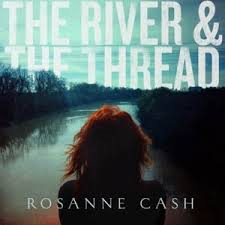
I have been listening to Rosanne Cash’s new album “The River & The Thread” and Jill Hennessy’s “Ghost In My Head” pretty much on an infinite loop for the past two months. And just like the contradiction of my despising reviews of music and yet having the need to write about it, those two albums are very different. And yet I am addicted to both.

If you’ve known me for more than 47 minutes, one of the things that you’ve learned about me is that I am a tremendous fan of Rosanne Cash. That is not to say that I am a tremendous person, but rather that I will easily become the most tremendous blow-hard if you wanted to “chat” with me about her music. You will quickly look at your watch, silently wondering how you are going to extricate yourself from the conversation, thinking “Jesus Christ. All I said was ‘7 Year Ache’ was a good song. I didn’t even know who sang it. I thought it was KT Oslin. I have a family to go home to.”

020

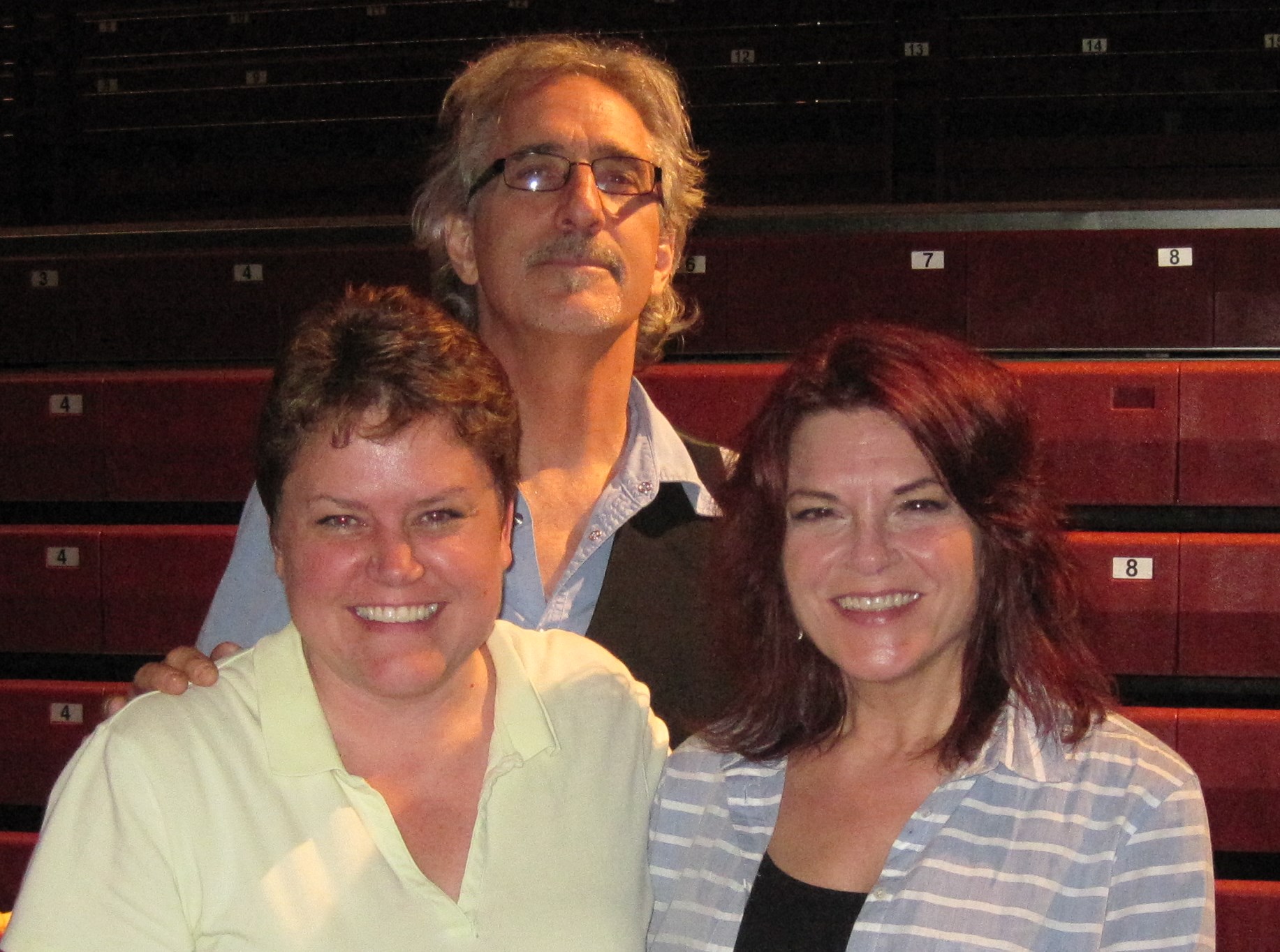
Here I am in an intimate moment with Rosanne Cash, being photobombed by her husband, John Leventhal.

I have loved and admired Rosanne Cash for decades. Have you ever heard a particular singer’s voice and something clicks deep inside of you and you realize “I am this person’s slave. I will do whatever it is they want me to do. Wake up to buy tampons at 2:30am? Sure. Go murder the President because he won’t publicly support an anti-gun initiative? (Wouldn’t THAT be ironic?) I will do it, because I am their slave and they own me?” Has no one else had this happen to them? Well. If Rosanne Cash needed me to buy tampons–which, in and of itself would be an impressive request, because she’s in her 50’s–I would put the slippers on, fumble for the keys and look for the nearest 24-hour pharmacy.

I reveal that level of devotion to let you know that there is absolutely no way that I could seriously criticize any work that she did. I mean, it’s ridiculous to even expect it. But I will do my best to be objective.

But–it’s fucking ridiculous. I mean, I have been backstage as she performs soundcheck on some of the very songs I am going to be talking about. Please. I’m biased. Totally, irrevocably, biased. That’s another thing that pisses me off about music critics. If you don’t like someone because they’re a selfish, conceited, unmanageable prick, just say that. Don’t mask your resentment of their personality with a bad review. Conversely, if you are completely smitten with someone, be bold enough to admit that you are hypnotized by them, and that is why you are giving them a glowing review. (I’m looking at all the Taylor Swift fans out there.)

The River & The Thread

Rosanne Cash’s latest album, The River & The Thread, is a beautiful masterpiece.

For me to really get into the subtle nuances of her album…that would require you the reader to be face to face with me. We would consume either too much coffee or too many beers, but together, in conversation, we would parse this woman’s evolution down to its essence. Because she is a complicated woman. That is one of things I love about her. I am not going to do that justice in this essay.

To truly appreciate the beauty of Rosanne Cash’s latest album, you have to understand the albums that came before it. The reviews, be they on television, on NPR, or in print, don’t seem to focus on that. I mean, AT ALL. But, again…*hatred of music critics*…sigh. Stupid fuckers. All they focus upon is her relationship with her father.

I think I loved Rosanne Cash long before I had even an inkling of who her father was. That probably makes me different from about 97% of her fanbase. When I fell in love with Rosanne Cash, I knew her father sang “A Boy Named Sue,” thanks to my own father’s record collection. My father also introduced me to “My Ding a Ling” by Chuck Berry and “Hello Muddah Hello Fadduh,” by Allen Sherman. He loved them all equally. So, at the time, I did not have a deep appreciation for Johnny Cash. That came later, with maturity, once I got out of the house. My love for Rosanne came first. I feel like I am swimming against the tide in that respect, as everyone seems to love her father first, and her only as an afterthought.

She has a legacy that she has to honor. In many ways she is American Royalty. (Miley Cyrus probably knows exactly how she feels.)

(Show of hands–how many people here don’t realize that Rosanne Cash’s father is Johnny Cash? Show of hands–how many don’t know who Johnny Cash is? Well. Thank you for reading this essay for as long as you have.)

Rosanne Cash has been in the music business for a long time. She has transformed herself–as many do–over the decades. I am particularly infatuated with the work that she has produced since 1993’s The Wheel. I mean, I LOVED her King’s Record Shop album from the 1980’s that garnered her so many awards, and of course I remember 7 Year Ache…but her work since The Wheel has been decidedly different. And that in large part has to do with the man that she was in love with, who produced it, and who has been her life partner and collaborator since, John Leventhal.

It is ridiculous, since 1993, to refer to any Rosanne Cash album as a “solo” work. Because it is always in collaboration with her husband.

They fused a blend of country & pop and mixed it with red-hot passion back on “The Wheel” in 1993. That’s a great album. I cannot believe it didn’t chart. I mean, seriously. That is one of my favorite albums of all-time. It bothers the hell out of me that no one has ever heard it, if the charts are true. So, if you would like me to burn you a copy, just send me a tweet @Twizznit.

They have evolved, she has evolved, and her relationship with her family/heritage has evolved. And it has all coalesced in The River and The Thread. And she has blended the perfect brew. My only criticism of it is that it is too perfect. I don’t admire perfection. I resent it. I like flaws, and I like to root for underdogs. The River & The Thread gives me none of that.

I could spend the next few paragraphs dissecting every song on the album, providing you with adjectives that make you want to shoot me or read your thesaurus and then find an imaginative word for “murder,” but suffice it to say that Rosanne Cash has created a very soothing album that blends the history of her past with the history of her marriage with the history of music. Her husband plays on the record. Her husband produced the record. I don’t know how to tell you he is a genius, but he is one. She thanks, in the acknowledgements, her husband John. “We painted this together.” They did. And it is a beautiful painting. Are you familiar with her “Black Cadillac” album? Such a beautiful tribute to all the people she had lost during that time, including her father. (Her father is Johnny Cash. The singer.) And on the eponymous song, Black Cadillac, I could swear there is a trumpet tribute to Ring of Fire on it. I am probably wrong. But at the end, I swear I can hear it. Again, what do I know? I’m not a Johnny Cash fan, nor a music critic. The point I’m trying to make is that these people are serious, subtle, masters of their craft. The River and The Thread seems not only to tie into her familial roots, or the roots the South, but also to the past 20 years that she has been making music with her husband. But, unless you have heard the albums that they’ve made together, you would quite possibly miss that.

Rosanne Cash is, above all else, always in control of her emotions. There is a reason that her autobiography is titled “Composed.” She is focused on mastery, and you can feel the mastery in every song on The River and The Thread. There is nothing raw or unhinged about a Rosanne Cash song. She is always in control. It’s beautiful and intimidating.

It’s fascinating to me–again, because I know a little bit about her musical history–that the most interesting collaboration she performs on The River & The Thread is with her ex-husband, Rodney Crowell. They raised four children together but have been apart for decades…and yet, when they sing, it’s pretty obvious that they sound great together. Again…in keeping with the River and the Thread theme…that life, love, history and land all relate…it’s pretty awesome (and subtle) that she would recognize that with a soft duet with her (ex) husband.

To someone who has never heard of Rosanne Cash in their life…this is a soft, safe, crooning album. She is not going to surprise you, although she may please you. (Does that sound like something an asshole music critic would say? Please tell me that’s not as bad as “it’s self-conscious without being self-absorbed”?) She is a wonderful master, in her 50’s, who services the song…oh, Jesus, I think I heard that on NPR once. I need to shut up now.

When I’m not listening to Rosanne Cash’s new album, I’m playing Jill Hennessy’s 2009 debut, Ghost in My Head. Rosanne has come so far, and Jill is just getting started. What a contradiction.

Jill Hennessy Ghost in My Head

What year is this? Are we in 2014? That’s…okay. So, it’s been 5 years since this album has been released. Give or take. I’m a fairly new listener to it.

If you remember the early years of Law & Order or the television show Crossing Jordan, you should know who Jill Hennessy is. From the moment I saw her on Law & Order, she was in my “Top Ten.” The Top Ten, of course, being a list of beautiful women on television that, once they decided they wanted to sleep with me, I would accept into my bed as long as they were at the top of the list. (Thank God only men are sexist pigs, or else I might feel guilty about shamelessly rating women.) And Ms. Hennessy was always in the Top 10. Who else was in the Top 10? God, it was ever evolving. Madeline Stowe. Oof. And Mary Elizabeth Mastrantonio. Oh. My. God.

Can we please just take a moment to honor the powerful beauty that is Mary Elizabeth Mastrantonio?

Whew.

Breath-taking.

No.

I still need a moment.

***

Sometimes I miss the 90s.

Alright. So now that I’ve established my sexist credentials, please allow me to dissect Jill Hennessy’s album further.

Please know that I was TERRIFIED to listen to this album. It took me YEARS.

I had been following Jill Hennessy on Twitter for many years, ever since I signed up for the service. From following her, I knew that she had made an album. And I completely, deliberately, avoided it. I was scared to death.

Try to imagine someone that you love watching on television or in movies suddenly deciding that they were going to sing.

I did that already, with someone named Russell Crowe.

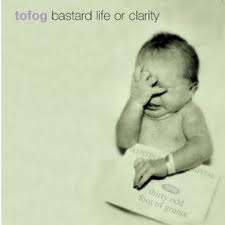
Have you heard of him? Oh, yeah. I have his CD. 30 Odd Foot of Grunts. Yep.

30 Odd Foot of Grunts

Even the baby is ashamed to be associated with this album. “My God. What will my parents think?”

I own this album. It is on my iPod.

I loved Russell Crowe. Have you ever seen him in The Sum of Us? I had such high hopes for him. So, when he came out publicly to say that, yes, he was a musician…I scooped that shit up. Who wouldn’t? I loved him in The Sum of Us. And why would he lie?

And then I listened to his album.

To my credit, I haven’t killed him.

But, he did completely ruin me for the “actors who want to sing” set. I was done after that. He was that powerful & awful. That Pawerful.

So, when I joined Twitter and found Jill Hennessy, and her bio said that she was singing and had an album out, of course my first thoughts were towards Russell and I was all “Isn’t that nice.”

I completely ignored this woman’s singing for, what, two years, at least. Possibly three. Who but the NSA can know for sure how long I’ve been on Twitter.

I don’t think you understand how much I love this woman. She changes the physiology of my body–but only an asshole would say “she changes the physiology of my body.” I can’t breathe when I see her. There is like a gaping hole in my abdomen where my appetite used to be when I see her. She utterly stupefies me. She’s one of the most beautiful women I’ve ever seen in my life. So why would I want to fuck that up by listening to her sing and have her turn into Russell Crowe all over again? No one needs that shit. So I knew she was singing…and I politely ignored it.

Then, one day, on the Twitter, I said something about something she wrote, and she wrote back. (Soon I was to discover that she is very responsive to her fans. Like, VERY responsive. If I my girlfriends were that responsive to me, I probably would feel better about myself as a lover.) All of the sudden, this actress that I had admired, easily, for 20 years, was conversant. Shit! Fuck.

I downloaded her debut album. Because I felt guilty that I hadn’t listened to it. I didn’t know how to tell her “I have loved you for 20 years as a sporadic actress. I don’t want to heard your shitty vanity album and have all that love turn to hate.” It was released in 2009. I can’t remember being so scared to listen to anything in my life. Again, you have no idea how much I’ve admired Jill Hennessy as an actress.  And then there was Russell Crowe, Russell Crowe, hounding me in the back of my mind. I felt like I was losing my virginity for the first time all over again.

God, I was scared.

That was like two months ago. I haven’t really stopped listening to it since. I’ve kinda turned psycho about how much I love it.

So that’s the review you’re going to hear.

Remember how I said Rosanne Cash is so polished? Well. Jill Hennessy isn’t. And yet.

When I listen to some of her songs, it sounds as if she is playing for money in a subway…which kind of is perfect, because that is how she started.

I have my friend Rosanne Cash publicly saying that “It’s a mistake to say that songwriting is therapy,” and then there is Jill Hennessy saying that, yes, her songs were therapeutic.

(I just realized that I called Rosanne Cash my friend. We, (and by we I mean me and my cats) will let that go. C’mon. Let me die with my cats and my “friendship” with Rosanne Cash.)

I was so scared that Jill Hennessy was going to suck as both a singer and songwriter. I was just…I didn’t want to touch it for years.

But, I love Ms. Hennesssy’s work for almost the exact opposite reasons that I love Rosanne Cash’s.

I don’t understand the profession of songwriting. But there is something about Jill Hennessy’s voice that completely hypnotizes me. Her lyrics are so raw and personal–whereas Rosanne Cash’s are so ephemeral & universal.

After accepting that Jill Hennessy was a singer, I have learned a little bit about her history, and I now know that she began her career singing for money in the subways. You can totally hear that in her debut album.

But there are some songs that break through that busking genre and give you hope that there is something powerful underneath. I cannot stop listening to 4 Small Hands.

(Full disclosure: Before I started to listening to Jill Hennessy, I had no idea what “busking” was. I thought it was a city in Canada. Now I’m tossing the word around like I’ve used it for years. I’m 44, people. I had no idea what it was about 3 months ago.)

Apparently, when Jill Hennessy started her life as an artist, it began as a street musician.

It’s always ridiculous when you tell your friends “Hey, listen to these things!” “I like them! And if you like me, you’ll like them, too!”

Rosanne Cash’s new album and Jill Hennessy’s debut album are two totally different things. One is polished and composed and professional and the other is open and raw and intense. One knows who she is and where she comes from. One is trying to find a foothold in a harsh business. I love both of them.